

Case study Website

Six clinics, one front door, and now it books the scan.

GIG Radiology's public website: online booking, a page for every clinic and every scan, and a hub for the doctors who refer.

Build time
Two weeks
Project value
$9,500
Live since
October 2026

GIG Radiology's website used to be a Wix site. The new one is built to do the front desk's first job: a patient picks a clinic, photographs their referral and asks for the times that suit, and the clinic team calls to confirm. Referring doctors have the image viewer, e-referrals and referral pads in one place. And every address the old site ever had still lands somewhere useful.

Pages
33
Clinics
6
Guided forms
8
Old addresses redirected
97

Live at gigradiology.com.au since October 2026.

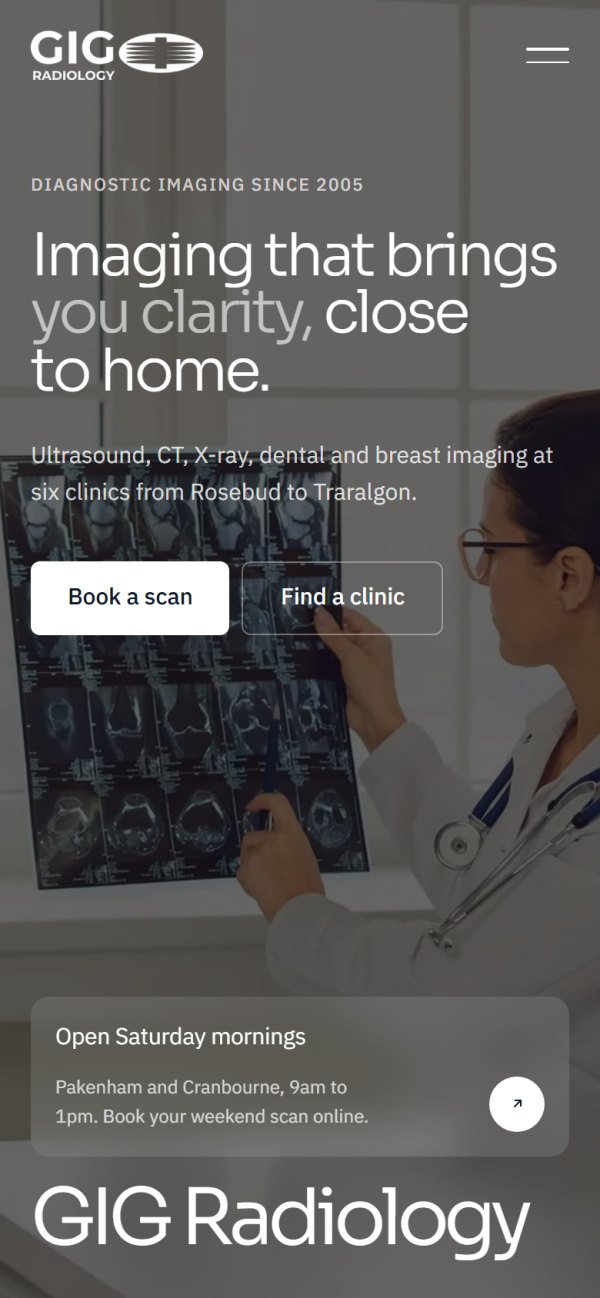
The GIG Radiology homepage: the headline Imaging that brings you clarity, close to home, over a photo of a radiologist reviewing scans, with Book a scan and Find a clinic buttons
The homepage. Book a scan and find a clinic are the first two things on it, and Saturday mornings are mentioned before anyone has to ask.

Who it is for

GIG Radiology runs six imaging clinics across Melbourne's south east, the Mornington Peninsula and Gippsland: Pakenham, Officer, Cranbourne, Traralgon, Rosebud and Koo Wee Rup. Ultrasound, CT, X-ray, dental and breast imaging, with CT and general X-ray bulk billed.

Three kinds of people come to the site, each wanting one thing. Patients want the nearest clinic, whether their scan is bulk billed, and a way to book it. Referring doctors want their patients' images and an easy way to refer. And the practice needed all of it carried across without losing a single phone number, opening hour or preparation note from the old site.

What we built

A new site from the ground up, in GIG's own navy and white: flat colour, light display type, full width photography under a dark veil so the words always read, and the official logo files, never redrawn. The practice reviewed a first design direction and asked for something closer to a premium studio feel; the second was refined with them page by page.

Booking a scan in five short steps

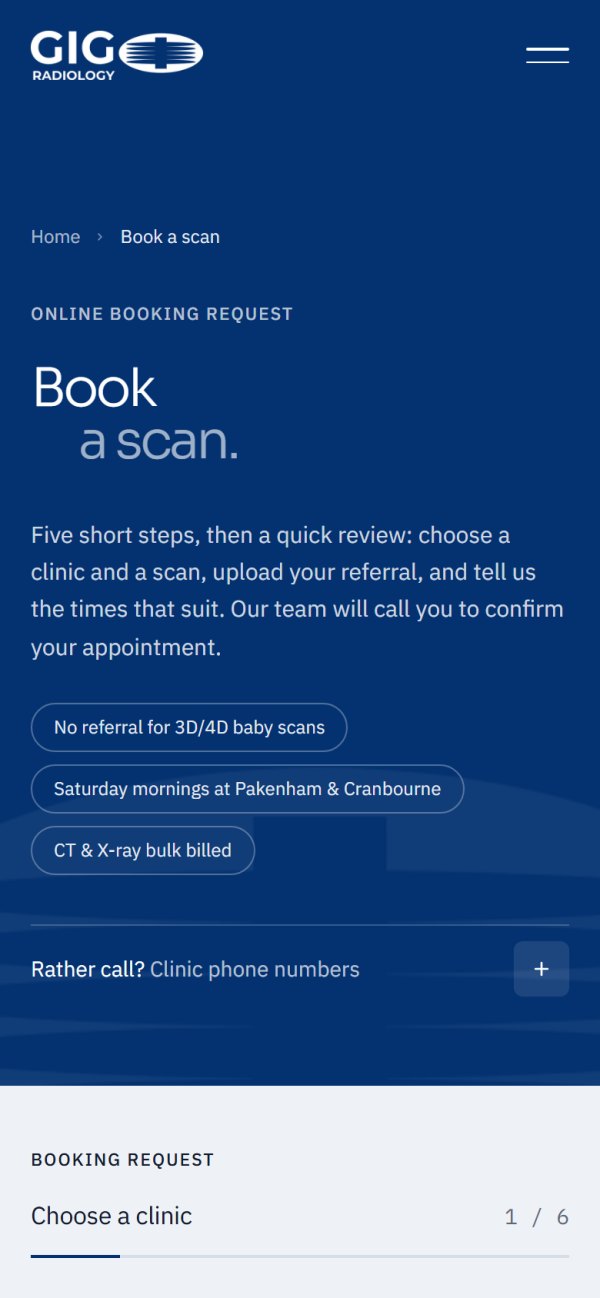
Choose a clinic, choose the scan, add the referral, leave your details and pick the times that suit, then a quick review before it sends. A photo of the referral is enough: it is shrunk on the phone before it uploads, so it goes through on a weak connection. Every request gets a reference number, goes straight to the team's inbox, and the team calls to confirm. A booking link on any clinic or service page opens the form with that clinic or scan already chosen.
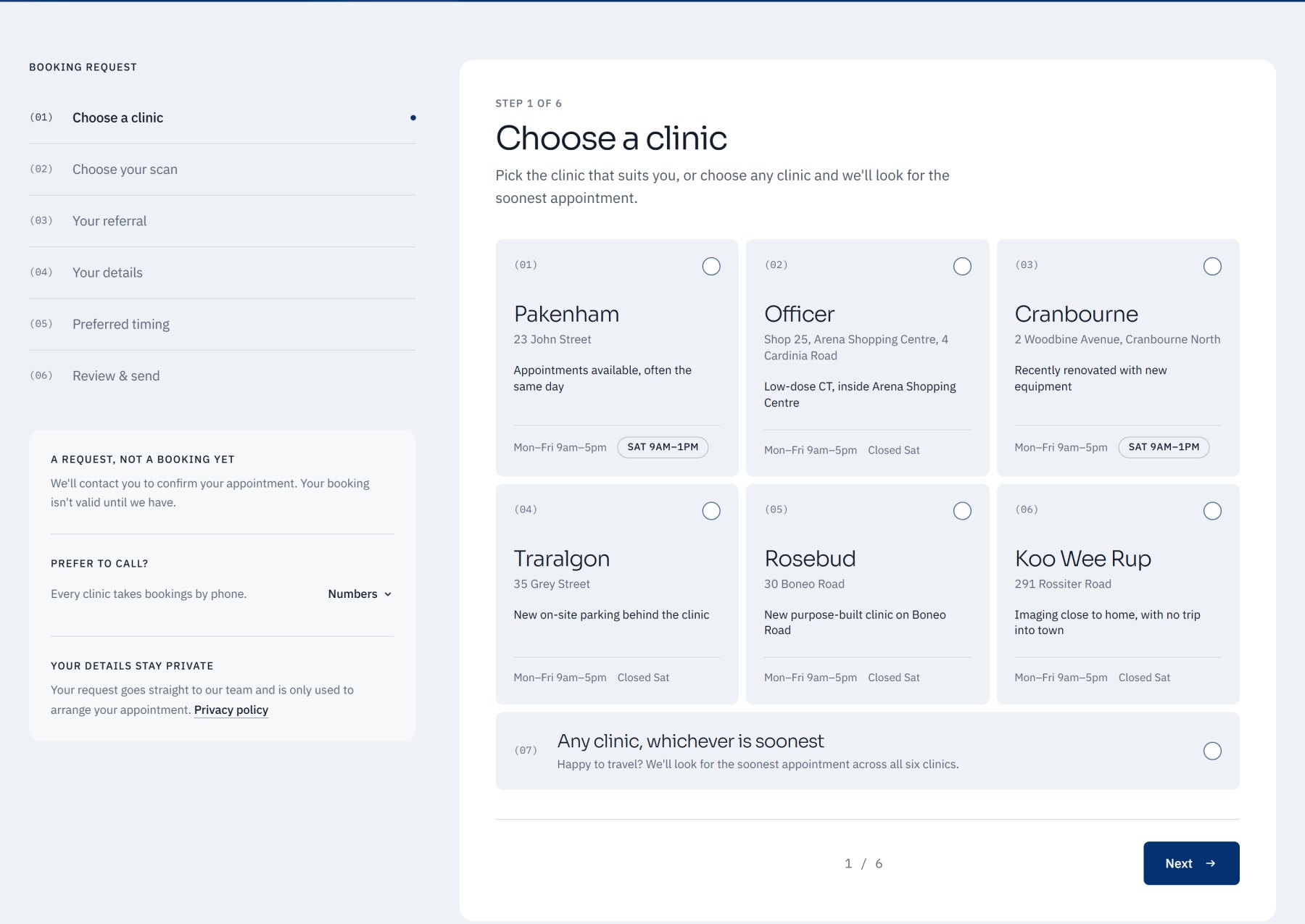
Step one of the booking request: the six clinics as cards with their address, hours and what is special about each, an option for any clinic whichever is soonest, and the six steps listed down the side
Step one of six. Each clinic shows its hours and what sets it apart, and the last option is any clinic, whichever is soonest.
The GIG Radiology homepage on a phone, with Book a scan and Find a clinic on the first screen
On a phone, booking and the clinic list are on the first screen.
The booking request page on a phone, with every clinic's phone number one tap away and the first step of the form below
Rather call? Every clinic's number is one tap away.

A page for every clinic and every scan

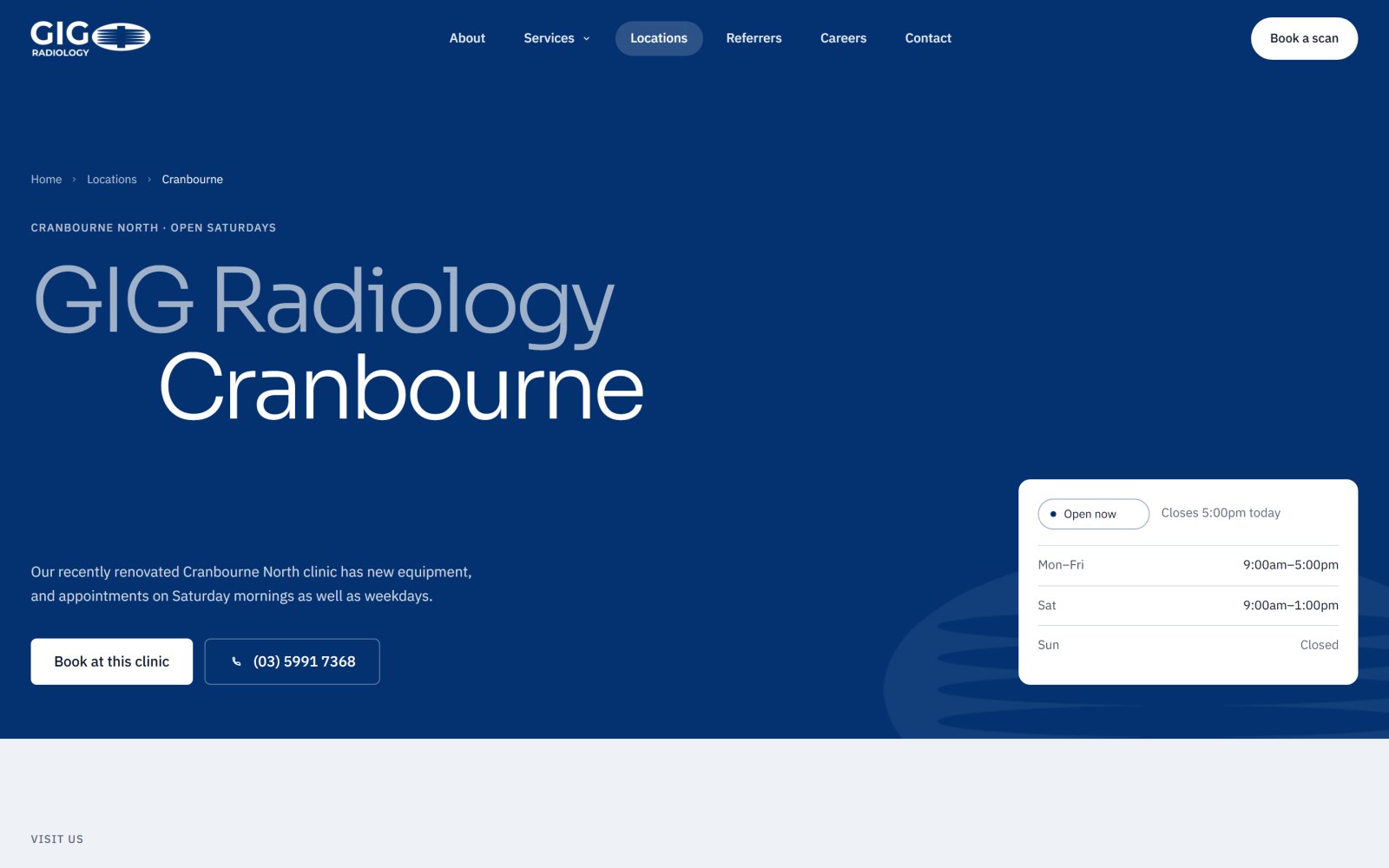
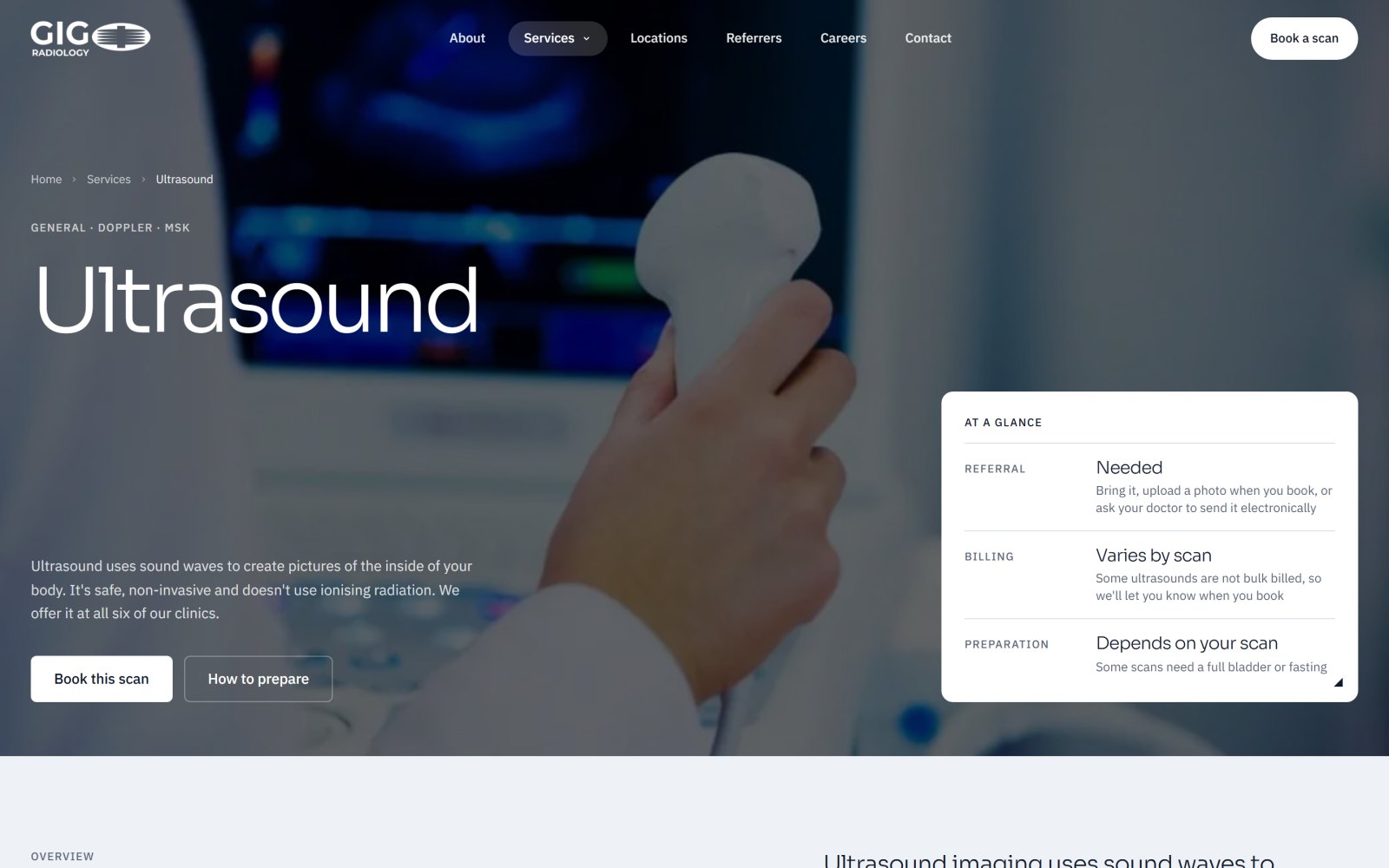
Each of the six clinics has its own page: its hours, whether it is open right now, a map, its phone number and a booking button that already knows which clinic you mean. Each of the nine services, from general ultrasound to CT, mammography and 3D and 4D pregnancy scans, has its own page too: what it is, whether it needs a referral, how it is billed and how to prepare. Every hour, address and preparation note was carried over from the practice's existing site, and anything that needed a decision was listed for the practice to confirm before launch.

The Cranbourne clinic page, showing that the clinic is open now, its weekday and Saturday hours, and buttons to book at this clinic or call it
Cranbourne: open now, the week's hours, and book or call from the top of the page.
The ultrasound page, with a panel summarising whether a referral is needed, how it is billed and how to prepare
Ultrasound at a glance: referral, billing and preparation before the detail.

A front door of their own for referring doctors

Referrers get a hub that is kept apart from the patient pages, so neither crowds the other: the online image viewer, where studies are ready to see within about 15 minutes, e-referrals from Best Practice or Medical Director, referral pad orders, and Medical-Objects setup, with help from GIG's in-house IT team.

The referrers page, headed Referring, made simple, with buttons to open the online viewer and set up e-referrals, and figures of 15 minutes until studies are ready and 6 clinics
The referrer hub: images online in about 15 minutes, six clinics to choose from.

Eight forms, each to the right inbox

Bookings, general enquiries, feedback, IT support, job applications, student placements, referral pads and electronic referral setup each have a guided, step by step form that checks itself as you go and shows a review before it sends. Each one emails the team that handles it, with the sender set as the reply address, so staff simply press reply.

Spam is stopped on the server, not just in the page: posts from other sites are refused, bots are binned without being told, and Cloudflare Turnstile checks every send. If Cloudflare cannot be reached, the form still goes through rather than turning a patient away.

Nothing lost in the move

The old site was crawled in full, hidden pages, lightboxes and file links included, and 97 redirects now carry every one of those addresses to its new page, so bookmarks, printed links and search results keep working. Old staff links go straight to the staff portal we built for the group, and anything that still slips through lands on a page with every clinic's phone number.

A report on the first of every month

The site counts its own visits, without cookies and without storing anyone's IP address, and emails the practice a report on the 1st of each month: visitors, bookings and enquiries per clinic, calls and map directions per clinic, how often each form is finished once it is started, which scans people ask for, and where visitors come from, down to each clinic's Google Maps listing and AI assistants. Month on month, against the same month last year, and the year to date.

How it was delivered

Built and launched in two weeks, where a site like this usually takes us about four. It runs on Next.js and Vercel, with no database to look after: forms arrive by email. Every page has its own title, description and canonical address for search, every clinic and service is in the sitemap, and the redirects were tested against the old site's full list of addresses before the switch.

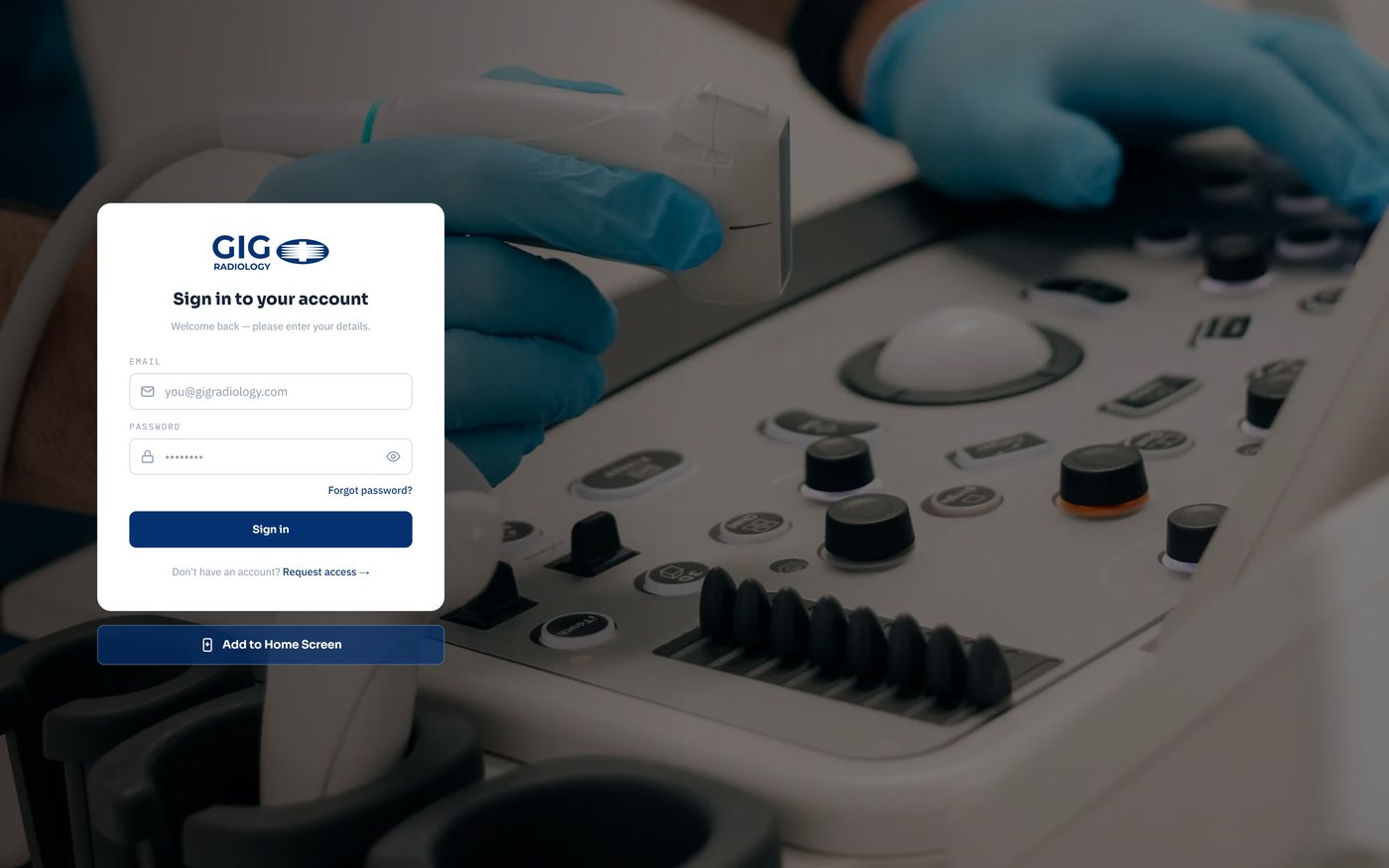
Also for GIG Radiology The staff portal behind the six clinics Rosters, timesheets, leave and documents for 45 staff, and 142 fortnightly timesheets into payroll without one being re-keyed. Read that case study

Your turn

Does your website take the booking, or just the phone call?

If customers still have to ring to get anything done, or your best enquiries arrive as a name and a number, tell us how people find and book you now and we will tell you honestly what the site should do.

Start a project